It’s a Suit!
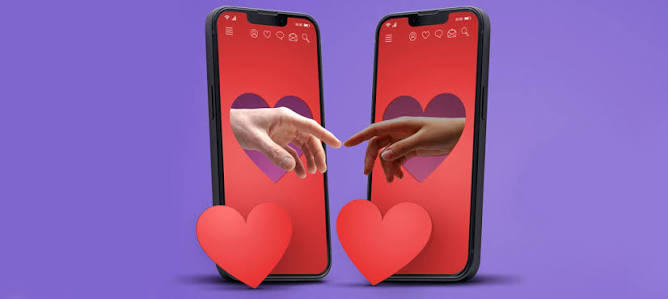
Digital match-making services have actually done more than just transform how we find our excellent squeeze; they’re altering the basic nature of our social networks.
According to a pair of scientists investigating on-line dating, the way we’re seeking love (and desire) is linking communities in completely unique methods, breaking down limits and possibly also producing more powerful long-term relationships.
It wasn’t all that long ago that most partnerships would start with a smile and a handshake, as opposed to a click or a swipe.
That started to transform in the mid-1990s, when websites like Match.com combined typical lonely-heart classifieds with the comfort of the web.
Today there’s a wide variety of websites and applications to suit your tastes, way of life, sexuality, and budget plan, from Tinder and Bumble for a quick swipe to such as, to OKCupid and eHarmony for those who desire their wit to show with their words.
Any preconception over on-line dating has gradually evaporated for many years. 15 percent of Americans confess to having made use of online dating, and 5 percent of those who are wed or committed long-lasting relationships mentioning they met their spouse online.At site www.pixelpusher.us from Our Articles
Love in the Digital Age
Not just has digital technology made dating easier for charming hopefuls, the information gathered by such websites has actually been a benefit for scientists curious concerning human breeding routines.
Yet it’s clear that the digital revolution hasn’t just been formed by the human hunger for sex and companionship; it’s altered the method we develop partnerships.
Economists Josue Ortega from the College of Essex and Philipp Hergovich from the University of Vienna would like to know simply exactly how the surge of electronic match-making has actually affected the nature of culture.
Society can be designed as an internet of woven nodes, where people are the node and the web link explains exactly how well they recognize one another.
Lots of people are snugly gotten in touch with about a hundred nodes, including friends and family, and loosely gotten in touch with others.
We can trace pathways through connections to all come to Kevin Bacon– or virtually any other figure on the world– in surprisingly couple of steps.
“Those weak connections function as bridges in between our team of buddies and other clustered groups, allowing us to link to the international area,” Ortega and Hergovich informed MIT Technology Testimonial.
Even just a couple of decades ago most new connections were just a dive or more away inside an existing network. A bar, a sporting team, church, or university would typically supply the ideal atmosphere for those first hot stimulates.
None a lot more.
For heterosexual pairs, online dating has risen to 2nd area– simply below ‘satisfied through close friends’– as the context for that very first intro. Amongst homosexual couples, digital match-making has actually escalated.
And the knock-on effect is extensive.
“Individuals who meet on the internet have a tendency to be full strangers,” claim the scientists.
As for networks go, this resembles building brand-new freeways in between communities, as opposed to taking the local backroads. Simply a few arbitrary brand-new paths in between different node villages can completely change exactly how a network features.
Take interracial relationships, for example, long held to be a measure of the basic social distances within a population.
As soon as unlawful in many states, and lengthy taboo, marriage between different ethnic groups in the United States has gradually been on the surge given that the mid-20th century.
The boost steepened at the turn of the 21st century according to the surge in on-line dating, and then also additionally as swipe-to-match applications like Tinder went mainstream around 2014 (it introduced in late 2012).
While there are almost certainly a selection of impacts, the network modifications arising from online dating fits the monitorings completely.
“Our model forecasts almost total racial assimilation upon the emergence of on the internet dating, even if the variety of partners that individuals meet from recently developed ties is little,” say Ortega and Hergovich.
Marital relationships on-line were also forecasted by the design to be a lot more robust and much less likely to end in divorce, a theory which is supported by a research carried out in 2013.
The study is currently readily available online on the pre-publish internet site arxiv.com, so it has actually not completed its complete peer-review process just yet.
It can frequently seem as if the on the internet globe enhances our echo chambers and leads us to become extra insular, particularly when it pertains to social media.
It behaves to have some proof that the connections we make online are additionally breaking down borders and making for more powerful connections.
Add a Comment